
Blog

- Details
Polycyclic aromatic hydrocarbons, or PAHs, are harmful chemicals created whenever organic materials like wood, oil, or coal are burnt. PAHs are also formed during grilling of meat or fish. This leaves behind an invisible, toxic footprint that most of us breathe in or eat every single day. Exposures come through outdoor and indoor sources like cigarette smoking, wood burning, wildfires, vehicle traffic, and grilling meat. These sources are often unavoidable in the modern world.
PAHs are known to have a direct link to reproductive hormone disruption in women and increase the risk of breast cancer. Though most PAH studies have focused on adults, recent papers published by Dr. Esther M. John at Stanford University and her colleagues focused on PAH exposure in young girls during puberty. The researchers explored whether PAHs are linked to early puberty, which increases the risk of breast cancer later in life.

- Details
Dr. Dimitri Abrahamson is a scientist at UCSF, working alongside Dr. Kimberly Badal in her ongoing chemical mixtures study. As a computational chemist using virtual laboratories, in addition to test tubes, Dr. Abrahamson’s expertise is in the connection of technology, medicine, and chemistry. Camille Sytko (Science Communications Intern) and Lianna Hartmour (Zero Breast Cancer Program and Communications Director) at the Collaborative for Health & Environment (CHE) had the opportunity to interview him to better understand the important role machine learning plays in the study, and what benefits machine learning may continue to bring to the field of environmental health.
- Details
In 2025, Zero Breast Cancer continued to thrive as part of the Collaborative for Health and Environment (CHE). Our ongoing work in multigenerational breast cancer risk reduction, survivorship, and research partnerships is moving us toward our vision of a world with zero breast cancer. Below we have spotlighted outcomes of some of our most impactful programs.
- Details
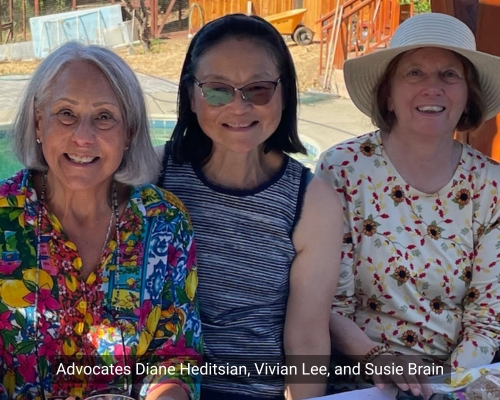
This blog is the fourth in a series about an ongoing study that examines how environmental exposures to chemical mixtures may contribute to breast cancer risk (the first blog explains the study, the second explains non-targeted analysis, and the third explains DNA methylation). The study is led by Dr. Kimberly Badal from the University of California, San Francisco. In addition to collaborating with other researchers, Dr. Badal’s study prioritizes collaboration with breast cancer research advocates. The three advocates involved in this study are breast cancer survivors whose lived experience makes them uniquely suited to communicate the need for environmental breast cancer research and ensure that the research represents patient interests.
Zero Breast Cancer’s Lianna Hartmour had the opportunity to speak with advocates Vivian Lee, Susie Brain, and Diane Heditsian about why there is a need for advocate involvement in environmental breast cancer research. She also spoke with Dr. Badal to hear her perspective on how advocates inspired her research.
- Details
In this third blog in our series exploring how chemical mixtures relate to breast cancer risk, we explain what DNA methylation is and how it is relevant to a groundbreaking new research study. (Read the first blog explaining the study background and the second blog explaining non-targeted analysis.)
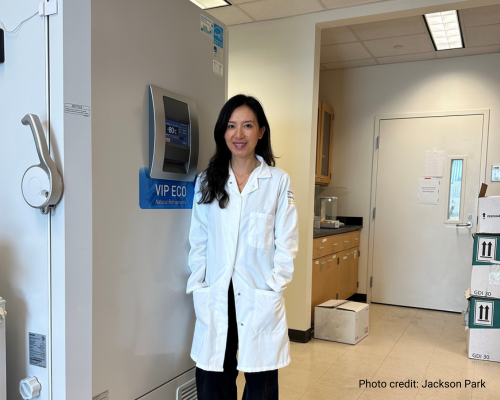
The study is led by Dr. Kimberly Badal from the University of California, San Francisco, with help from Dr. Hannah Lui Park from University of California, Irvine and other researchers. It aims to find out which individual chemicals and chemical mixtures are linked to breast cancer. The study will give insight into how we can reduce exposure to chemicals to lower the risk of getting breast cancer. We interviewed Dr. Park about DNA methylation, the method she brings to the study.

- Details
Zero Breast Cancer (ZBC) at Collaborative for Health & Environment (CHE) offers breast cancer prevention and survivorship health and wellness programs, including a health and wellness coaching program. We also provide resources on breast cancer prevention for audiences of all ages — from five-year-old children through survivors.
For more than 28 years, ZBC has centered community perspectives in our program and resource development. To illustrate how this works, I’m going to explain the development of our bilingual Generations/Generaciones resources about the impact of endocrine disrupting chemicals (EDCs) across generations.
- Zero Breast Cancer and Savor Health® are excited to introduce Ina®
- How do researchers study the role of multiple chemical exposures in breast cancer risk?
- 2024 Impact
- A Groundbreaking Study on Chemical Mixtures and Breast Cancer Risk
- Zero Breast Cancer joins Collaborative for Heath & Environment
- A Black Woman's Journey into Understanding Breast Cancer Disparities Blog Series - Part 2